
Yes. Composite decking can become uncomfortably hot in direct Charlotte sun, particularly when the boards are dark and the deck has little afternoon shade. Wood, concrete, pavers, and other outdoor surfaces also heat up, so the useful question is not whether one broad material category stays cool. Compare the exact decking line and color you are considering under the conditions at your home. Lighter colors and heat-mitigating product lines may reduce heat buildup, but no manufacturer promises a cool surface in full summer sun. Place real samples in the proposed deck area, compare them after sustained sun exposure, and plan permanent or adjustable shade over the walking, dining, and seating zones that matter most.
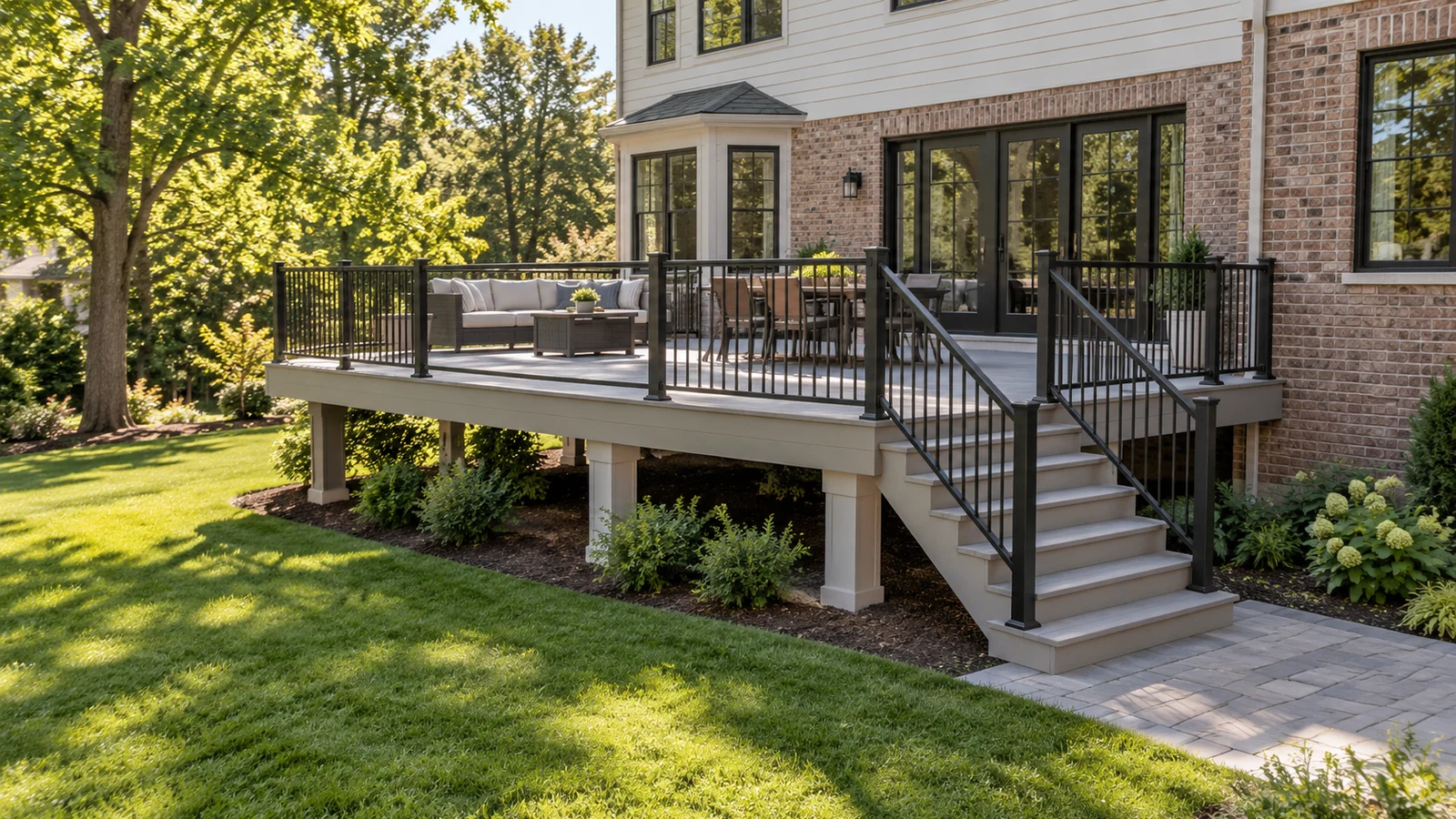
Why Does Composite Decking Get Hot?
Deck boards absorb solar energy and release it as heat. How hot the walking surface feels depends on the intensity and duration of sun, board color, material formulation, airflow, surrounding reflections, and whether the surface receives shade. A west-facing deck can stay comfortable in the morning and feel very different after several hours of direct afternoon sun.
Color is one of the clearest variables. Dark boards generally absorb more solar energy than lighter boards in the same product family. Trex states that its decking, like other outdoor surfaces, gets hot in direct sun and that darker colors feel hotter. TimberTech gives similar guidance and recommends lighter colors when heat mitigation is a priority. Those statements are useful because they avoid an unrealistic promise that any outdoor board remains cool in full sun.
Material still matters, but the label alone is too broad. Composite, mineral-based composite, and PVC boards use different cores, caps, pigments, and heat-mitigating technologies. Even within one brand, two collections can perform differently. Compare the technical information for the exact collection and color rather than carrying a claim from one product across every board sold as composite.
Which Deck Colors and Products Feel Cooler?
A light gray, light tan, or other pale finish is usually the better place to start when the deck will receive long periods of direct sun. The trade-off is visual: a very light board may contrast with the house, show certain debris differently, or create more glare than a mid-tone color. Select from actual full-size samples beside the siding, brick, trim, and railing instead of choosing from a small screen image.
Some manufacturers offer product lines specifically designed to reduce heat buildup. Trex describes SunComfortable technology as cooler than its original boards while clearly noting that the boards still get hot in direct sun. TimberTech describes heat-mitigating Advanced PVC options and likewise warns that all decking heats in sunlight. Read the footnotes and comparison basis before treating a temperature claim as a universal field result.
Do not assume the lightest color is automatically the best deck. Surface comfort should be balanced with traction information, board profile, span and fastening requirements, scratch and stain expectations, warranty terms, availability, and the architecture of the home. The practical goal is an exact board that fits the complete project—not a color chosen from temperature alone.
- Compare colors within the same product line before comparing unrelated collections.
- Ask which heat claim applies to the exact board, color, and test method being discussed.
- Review the current installation, care, and warranty documents before ordering.
- Place samples beside the house materials in sun and shade to judge both comfort and appearance.
- Keep a labeled sample of the final approved board with the project records.
How Should You Test Decking Samples at Home?
Test where the deck will be built. A sample held indoors or viewed beneath a dealer awning cannot show how it will behave behind a west-facing Charlotte home. Place the candidate boards side by side on a stable surface in the proposed deck area. Keep their angle, support, and exposure as similar as possible so shade from a wall or one sample does not distort the comparison.
Leave the boards out through the period of sustained sun that concerns you. TimberTech’s current heat-testing guidance recommends using longer samples when possible, placing them in full sun, and allowing at least two hours before comparing temperatures. Record the time, weather, whether the boards were dry, and which samples were shaded. An infrared thermometer can add a repeatable comparison, but use the same distance and method for every board and remember that a single reading is not a promise for every day.
Repeat the check during the hours when people will use the deck. A breakfast deck, an after-school play area, and an evening dining deck do not have the same exposure. Also look at how shadows from the house, trees, railings, and a future cover move across the footprint. The most useful result is a small map of where the deck is hottest and when—not simply one temperature attached to the whole yard.
- Use labeled samples of the exact collection and color under consideration.
- Give each sample the same support, angle, airflow, and sun exposure.
- Compare after sustained exposure and repeat at the intended use time.
- Use a thermometer rather than bare feet or hands to test a surface that may be hot.
- Photograph the shade pattern and record which areas need protection.
Can Shade Make a Composite Deck More Comfortable?
Yes. Shade addresses the solar exposure that heats the boards, so it can matter as much as color selection. Start with the zones where people remain or move most often: the path from the back door, dining chairs, lounge seating, grill approach, stair landing, and any area used by children or pets. A deck does not need to be covered edge to edge to make its most important areas more usable.
Shade can come from the house, mature trees, a properly planned umbrella, or a permanent outdoor structure. An adjustable louvered pergola can provide sun when wanted and close for stronger overhead shade, while an insulated solid patio cover provides fixed coverage. The correct option depends on the deck structure, post and footing locations, house attachment, wind and drainage design, electrical needs, and the amount of daylight you want to preserve indoors.
Plan the cover with the deck rather than treating it as a light accessory added later. Pergola and patio-cover posts create concentrated loads that deck boards cannot carry by themselves. Their foundations and connections need a complete load path. Roof runoff, stairs, railings, door clearances, utilities, and the direction of shade throughout the day also belong on the same plan.
What Can You Do if an Existing Composite Deck Is Too Hot?
Begin by documenting when and where the problem occurs. If only the exposed outer third becomes uncomfortable in late afternoon, targeted shade may be more useful than replacing the entire surface. If the main route from the door to the stairs is the hottest area, a cover or layout change should protect that route first.
Use umbrellas or freestanding shade only when their bases and wind limits suit the site. A permanent cover or pergola needs structural planning rather than fastening posts to the deck surface. Trees can provide valuable shade, but roots, falling limbs, debris, and long-term canopy growth need to be considered before placing new footings or building beneath them.
Be careful with rugs, mats, paints, coatings, and surface treatments. They can affect drainage, drying, color, heat, staining, and warranty coverage. Trex, for example, publishes specific rug-material guidance and does not recommend painting or staining its current high-performance boards. Follow the instructions for the exact installed product instead of using a generic deck treatment. If the board cannot be identified, determine the manufacturer and line before applying anything permanent.
- Map the hottest areas and the time they become uncomfortable.
- Prioritize shade over the main walking and seating zones.
- Confirm umbrellas and freestanding shade are stable for the site’s wind exposure.
- Do not fasten a permanent cover to deck boards as if they were structural support.
- Check product-specific guidance before adding rugs, mats, coatings, or paint.
What Should Greater Charlotte Homeowners Decide Before Ordering?
Start with the home’s orientation and the deck’s actual sun path. Mark the back door, stairs, dining area, lounge area, grill or kitchen, railings, and any future pergola or patio cover. Identify which zones need comfortable barefoot use and which are normally crossed in shoes. Then compare several exact board samples during the sunniest part of the intended use period.
Review the whole deck assembly, not only the surface. Board color and product affect comfort, while framing, drainage, flashing, stairs, guards, footings, and future shade loads determine whether the deck works as a durable structure. Verify the current manufacturer instructions and address-specific permit, zoning, HOA, and inspection requirements for the final scope before ordering material.
Unique Patio Concepts can help Greater Charlotte homeowners coordinate deck material, color, circulation, railings, stairs, and shade as one outdoor-living plan. The most useful selection is not a board advertised as universally cool. It is an exact board and layout tested against the home’s exposure, paired with shade where the family will actually use the space.
- Map direct sun and shade across the proposed deck at the hours you expect to use it.
- Compare exact light and mid-tone board samples outdoors for sustained periods.
- Choose the walking, dining, seating, and play zones that need dependable shade.
- Coordinate future pergola or cover posts, footings, drainage, and electrical work now.
- Review current installation, care, warranty, permit, zoning, and HOA requirements before construction.
Plan the deck surface and shade together
Request a Greater Charlotte deck consultation from Unique Patio Concepts to compare materials, colors, sun exposure, layout, and future shade options.
Request a free estimateFrequently asked questions
Does composite decking get hotter than wood?
It can, but the result depends on the exact products, colors, moisture, sun exposure, and test conditions. Dark boards in either category can become hot. Compare labeled samples of the actual products at your home instead of assuming one material category always wins.
What composite deck color stays coolest?
Lighter colors generally retain less heat than darker colors in the same product family. Light grays and tans are sensible starting points, but the board formulation also matters. Test the exact color and collection in sustained sun before ordering.
Is heat-mitigating decking cool enough for bare feet?
No manufacturer can guarantee that an exposed outdoor board stays comfortable in every condition. Heat-mitigating products may be cooler than the comparison boards identified by the manufacturer, but they still heat in direct sun. Test samples and plan shade for barefoot areas.
Can an outdoor rug make a hot composite deck cooler?
It may shade a small area, but only use rug materials approved by the decking manufacturer. Some backings or dyes can affect the board, and a rug can trap debris or moisture. Shade from a properly planned cover is usually a more durable whole-zone strategy.
Can you paint composite decking a lighter color?
Do not assume so. Many current capped composite boards are not intended to be painted or stained, and an unapproved coating may perform poorly or affect warranty coverage. Identify the exact product and follow its current care instructions.
Should a deck cover be planned before the deck is built?
Yes, when future shade is likely. Pergola or patio-cover posts, footings, loads, drainage, clearances, and electrical routes are easier to coordinate before the deck surface and framing are finalized. Deck boards alone are not structural support for a roof.