
There is no single best screen mesh for every Greater Charlotte screen room. A quality general-purpose fiberglass screen is often the best starting point when airflow, visibility, and everyday insect control matter equally. Choose a tighter no-see-um mesh when very small biting insects are the real problem, pet-resistant mesh where paws or frequent contact threaten lower panels, solar insect screen on a difficult sunny exposure, or a high-visibility product where the view is the priority. Every upgrade has a tradeoff. Denser or heavier mesh can reduce breeze, daylight, and visual openness, while finer view-focused mesh may not suit high-contact areas. Compare actual samples in the planned frame and decide by wall or use zone when the enclosure system allows it.
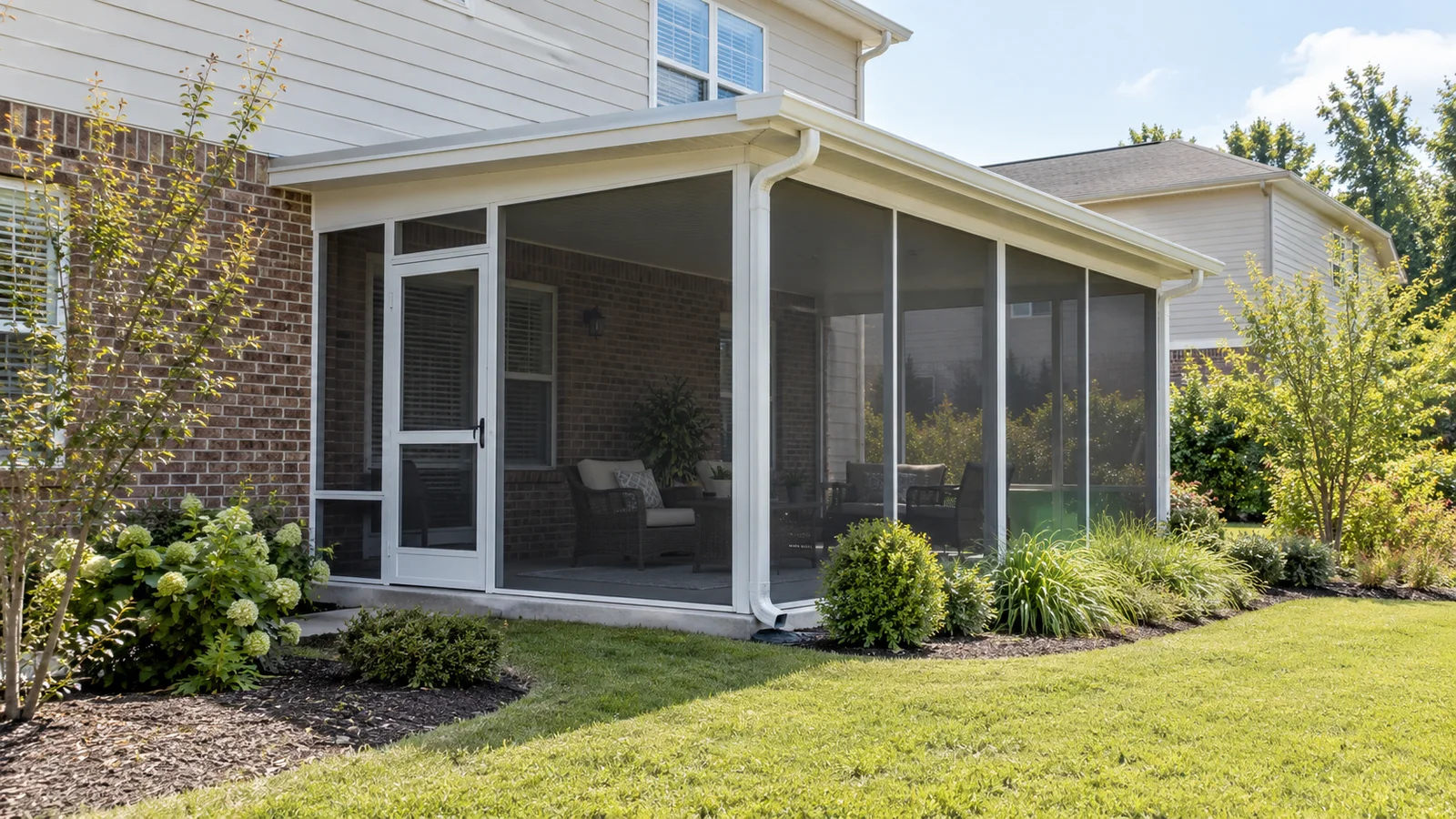
Why Is There No Universal Best Screen Mesh?
Screen mesh is a woven material, so changing the yarn, wire, opening size, or weave changes more than insect protection. A more open product can admit more breeze and light and disappear more easily against the view. A tighter or heavier product can address smaller insects, sun, or physical wear, but it usually becomes more visible and may move less air.
Phifer's current screening guidance explains this through mesh count, aperture, yarn diameter, and openness. Higher openness generally supports airflow and visibility. Lower openness can improve protection from small insects or sunlight while reducing some air and light. Those are product characteristics to compare, not reasons to assume the densest material is automatically superior.
TEMO currently lists fiberglass memory mesh, 20-by-20 no-see-um fiberglass, solar insect screen, and pet screen among the options for its Vertical Retro screen-room system. That range reflects the real design question: which performance matters most in each part of the room? Begin with the patio's conditions and the enclosure system being specified, then choose from compatible products.
- Identify the smallest insects that are actually causing trouble.
- Note which walls receive hard afternoon sun and which hold the best view.
- Mark door zones, pet routes, chair backs, and other high-contact panels.
- Compare manufacturer data for openness, material, mesh count, panel size, and intended use.
- Review full-size samples outdoors rather than choosing from a small online image.
How Do the Main Screen Types Compare?
General-purpose fiberglass or memory mesh is the practical baseline for many screen rooms. It is intended to balance common insect protection with an open view and useful ventilation. Choose it when mosquitoes and larger insects are the main concern and the panels are not exposed to constant pushing, clawing, or harsh solar glare.
No-see-um screen uses a tighter weave. Phifer describes its 20-by-20 fiberglass product as designed to keep out most smaller flying insects such as no-see-ums and gnats while retaining ventilation and visibility. The tighter weave still changes the feel compared with a more open screen, so use it because the smaller-insect problem is real, not merely because the number sounds better.
Pet-resistant mesh prioritizes tear and puncture resistance in active areas. Solar insect screening prioritizes shade and glare control. High-visibility products prioritize openness, airflow, daylight, and the outward view. None of those priorities delivers every benefit at its maximum. Ask for the exact product name and specifications instead of relying on broad labels such as premium, invisible, heavy-duty, or privacy screen.
- Standard or memory mesh: balanced starting point for common insects, breeze, and view.
- No-see-um mesh: tighter openings for most smaller flying insects, with an openness tradeoff.
- Pet-resistant mesh: stronger choice for lower panels and door areas exposed to claws or pushing.
- Solar insect screen: useful on a hot, bright exposure when reduced glare matters more than maximum openness.
- High-visibility screen: best considered for a primary view where physical contact is limited.
Can Different Walls Use Different Screen Mesh?
Sometimes, and that can produce a better room than specifying one material everywhere. A west-facing wall may benefit from a compatible solar screen while the garden-facing wall keeps a more open, view-focused mesh. Pet-resistant material may be useful only in lower bays or beside the door. A tighter no-see-um product may make sense on the side closest to standing water or evening insect activity.
A mixed plan must still work as one enclosure. Mesh thickness, spline size, track design, maximum panel dimensions, tension, color, repair method, and appearance can differ. Confirm that every chosen fabric is approved for the frame and opening rather than asking the installer to improvise incompatible materials in the field.
Look at the design from inside and outside. Two meshes that seem similar on a sample card may reflect light differently across a long wall. A darker or denser panel may be visually obvious beside a more open panel. If a consistent exterior appearance matters, limit material changes to logical wall sections or lower contact zones instead of alternating products bay by bay.
- Use the room plan to mark sun, view, insect, and contact priorities by wall.
- Confirm frame, track, spline, tension, and panel-size compatibility for each mesh.
- Compare samples in sun and shade from both sides of the proposed wall.
- Keep material transitions aligned with corners, doors, or horizontal rails.
- Record the exact mesh used in each location for future repairs.
Why Does the Rest of the Screen Room Matter as Much as the Mesh?
Even the finest mesh cannot compensate for gaps elsewhere. Insects can enter around a door that does not close squarely, a worn sweep, an open threshold corner, a torn spline edge, an unsealed roof-to-wall joint, or a penetration for wiring. The useful goal is a continuous screened boundary, not simply a fabric with a high mesh count.
Panel condition and cleaning matter too. Pollen, dust, spiderwebs, and landscape debris can make any screen look hazy and reduce airflow. Clean the selected material according to its manufacturer instructions, using accessible methods that do not stretch the panels or damage finishes. Replace torn or loose sections rather than expecting a denser neighboring panel to solve the opening.
Screens also do not turn a porch into a sealed interior room. Wind-driven rain, humidity, pollen, outdoor temperature swings, and fine airborne particles can still enter to different degrees. Vinyl sashes or other compatible enclosure options may extend seasonal use, but they should be evaluated as part of the selected wall system rather than treated as a promise of conditioned indoor performance.
- Check door alignment, latches, closers, sweeps, and threshold corners.
- Inspect spline edges, panel seams, roof joints, and house connections.
- Keep furniture, planters, and grills from rubbing or heating the mesh.
- Follow the screen manufacturer's cleaning instructions and avoid aggressive pressure washing.
- Plan how individual panels can be accessed and replaced later.
What Should Greater Charlotte Homeowners Decide Before Ordering?
Spend time at the patio in the conditions that drive the project. Check morning and afternoon light, the direction of the best view, when insects are active, where pets wait at the door, and how furniture will meet the wall. Bring those observations into the design meeting so the mesh choice answers a real problem rather than a generic sales hierarchy.
Request labeled samples of every proposed material and the product data for the exact mesh, frame, and wall system. Compare the samples against the yard in daylight and after the interior lights are on. Privacy can reverse at night, and a solar or dense mesh can feel different once it covers an entire wall instead of a small square.
A new screen room can involve structural, roofing, electrical, zoning, drainage, and permit review beyond the mesh itself. Mecklenburg County states that residential additions, load-bearing work, roofing, and changes to electrical systems can require permits and plan review. Requirements vary by address and across nearby North Carolina and South Carolina jurisdictions, so confirm the current path for the complete enclosure before ordering materials.
- List the insects, pets, sun, privacy, view, and traffic concerns in priority order.
- Compare exact mesh samples at the house in daylight and evening conditions.
- Choose material by wall or contact zone when the approved system supports it.
- Include doors, thresholds, kickplates, roof joints, drainage, and future panel replacement in the plan.
- Verify project-specific approvals, electrical work, and enclosure details before fabrication.
Choose the screen around how the patio will be used
Request a Greater Charlotte screen-room consultation from Unique Patio Concepts to compare mesh, wall systems, doors, views, sun, and future enclosure options.
Request a free estimateFrequently asked questions
Is no-see-um screen better than regular screen?
It is better when very small flying insects are the problem. Its tighter weave is designed to exclude most no-see-ums and gnats, but it is less open than many general-purpose screens. Compare the actual airflow, visibility, and brightness before using it throughout the room.
Does pet screen reduce airflow?
It can. Pet-resistant products use stronger, often heavier yarns to resist tears and punctures, which can make the mesh more visible and less open than a view-focused screen. Using it in lower panels or door zones may protect high-contact areas while preserving a more open mesh elsewhere.
Can solar screen make a screen room cooler?
A compatible solar screen can reduce direct solar heat and glare on an exposed wall, but it also reduces some daylight, outward visibility, and airflow. It does not condition the room. Compare the exact product on the sunny exposure and keep other walls more open when appropriate.
What screen gives the clearest view?
High-visibility products use finer yarns or more open constructions to make the screen less noticeable. The clearest option for one opening may not be the best near pets, doors, furniture, or intense sun, so compare clarity together with durability and insect protection.
Can a screen room use more than one type of mesh?
Sometimes. A compatible mixed plan can use solar mesh on a sunny wall, pet-resistant material in lower contact zones, and more open mesh toward the primary view. Confirm frame, spline, panel-size, tension, color, and manufacturer compatibility before ordering.
Does a screen room need a permit in Charlotte?
It may. A roofed enclosure or porch addition can involve building, roofing, electrical, zoning, drainage, or other reviews. The path depends on the address and complete scope, so confirm current requirements with the applicable authorities before fabrication or construction.