
Clean a screen room with the least aggressive method that removes the dirt. First brush or vacuum loose pollen, cobwebs, and debris from accessible surfaces. Then use lukewarm water, a small amount of mild soap, and a soft cloth, sponge, or soft-bristle brush. Work from the top down with light pressure, rinse gently with a garden hose where the installed system allows it, and let the enclosure dry. Avoid aggressive pressure washing, abrasive pads, strong solvents, and forceful scrubbing because they can stretch mesh, loosen spline, mark finishes, or push water into tracks and house connections. Follow the care instructions for the exact screen, frame, roof, door, and seasonal panels whenever they are more specific.
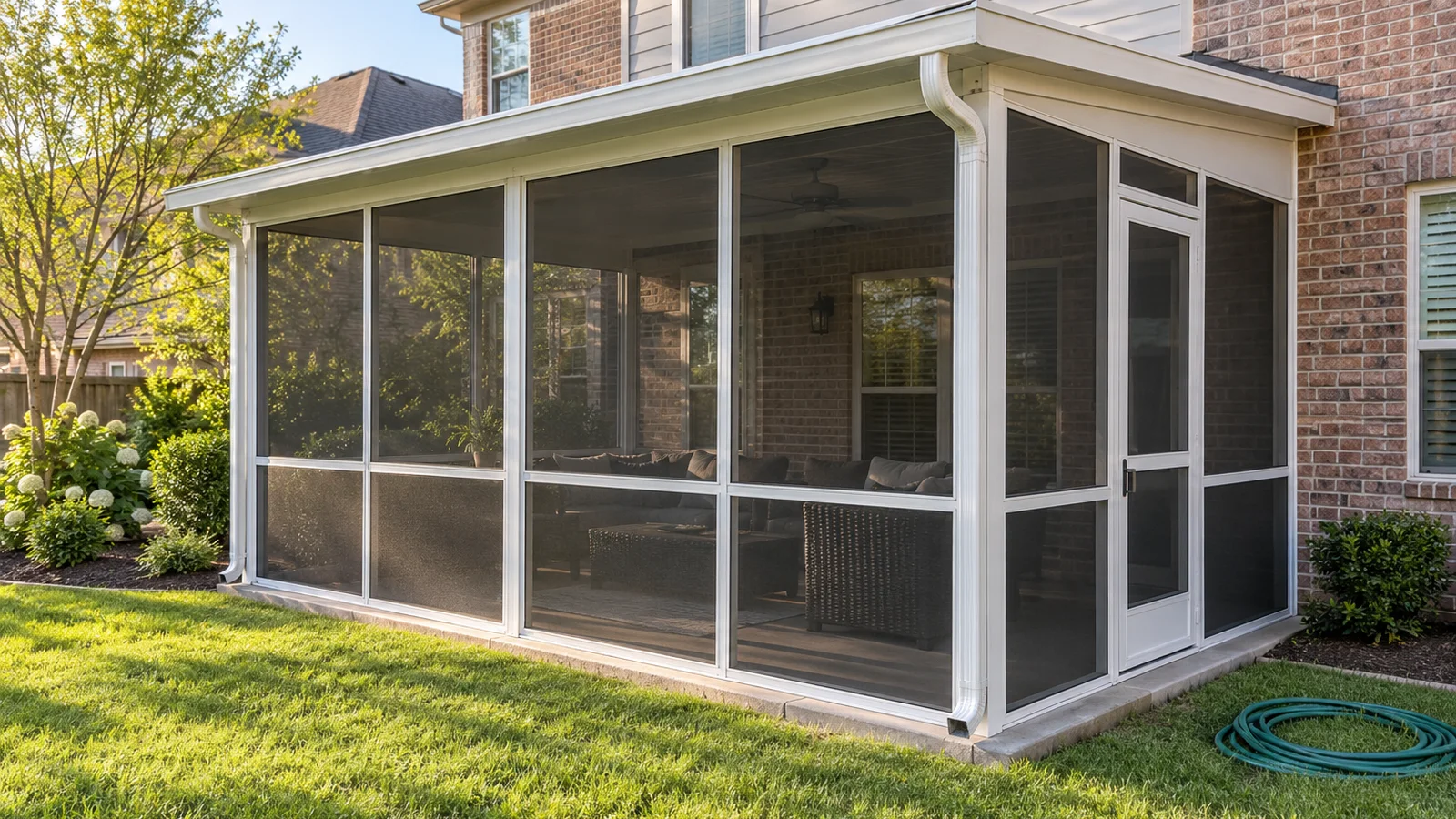
What Should You Do Before Getting the Screens Wet?
Begin with the installed system, not a generic cleaning recipe. Identify whether the room has fixed fiberglass insect mesh, removable panels, retractable screens, vinyl sashes, glass, or a combination. A method that is appropriate for a fixed mesh wall may be wrong for a retractable fabric, coated solar screen, clear vinyl panel, or proprietary window system.
Choose a dry, mild day and clear furniture away from the perimeter. Close the door to the house, protect nearby receptacles and controls, and note where rinse water can travel. If the room sits above a lower patio or beside a basement walkout, plan the runoff before opening the hose. Water should not be driven under siding, through a door threshold, into a track, or toward the foundation.
Remove loose material first. Use a soft hand brush, microfiber duster, or a vacuum with a clean brush attachment on low suction where the manufacturer allows it. Work gently over both sides that can be reached safely. Clearing pollen, cobwebs, dry leaves, and insect debris before washing keeps them from becoming a film that is harder to rinse from the mesh.
- Read the screen-room and component care instructions before choosing cleaners or removing panels.
- Keep electrical devices, controls, outlets, and lighting dry and follow their shutdown instructions.
- Move cushions and indoor-only furnishings out of the rinse path.
- Use only floor-level, stable access; do not lean outside panels or climb onto the roof.
- Test an unfamiliar cleaner on a small, inconspicuous area first.
What Is the Safest Way to Wash Screen Mesh and Aluminum Frames?
For ordinary pollen and dirt, lukewarm water with a small amount of mild soap is a sensible starting point. TEMO's current screen-room care guidance recommends soapy water, a soft-bristle brush, a garden-hose rinse, and air drying. Treat that as general manufacturer guidance; the manual for the installed enclosure should control if it gives a different cleaner, dilution, or procedure.
Wash one manageable section at a time from top to bottom. Apply the solution with a soft cloth, sponge, or soft-bristle brush and use light strokes rather than pushing the mesh inward. Large panels can flex under pressure, so let the solution loosen the film instead of trying to scrub it off in one pass. Wipe the aluminum members, door frame, and accessible trim with the same care, changing the water when it becomes dirty.
Rinse before soap dries. Use a gentle hose setting and keep the spray moving. The goal is to carry residue through and off the mesh, not to blast it into the spline channel, wall connection, door hardware, or room interior. If the enclosure's instructions do not permit hosing, use clean damp cloths and repeat the wipe-and-rinse process instead.
- Work in the shade or during a cooler part of the day so cleaning solution does not dry too quickly.
- Use a clean soft tool; trapped grit in an old brush can scratch a coated aluminum finish.
- Rinse until the mesh and frame no longer feel soapy.
- Wipe accessible frame edges and allow the mesh, tracks, and threshold to dry before closing seasonal panels.
- Keep cleaning runoff away from plants, pools, cooking areas, and neighboring property.
Can You Pressure Wash a Screen Room?
A pressure washer is not the default tool for insect mesh. A concentrated jet can stretch or tear a panel, pull mesh from its retaining spline, force water behind trim, and damage a coated finish even when the dirt disappears quickly. It can also drive water toward the house wall, electrical components, and interior furnishings.
A garden hose on a gentle spray is usually easier to control. If an installed-product manual specifically permits a pressure-assisted method, follow its exact nozzle, distance, direction, and pressure limits rather than copying a setting from a deck or siding project. Do not assume the aluminum frame and the mesh share the same cleaning limits.
More force is also the wrong response to a panel that stays cloudy after washing. The remaining problem may be mineral residue, finish damage, mildew, worn mesh, or dirt trapped between seasonal layers. Identify the material and ask for product-specific care before escalating to stronger chemicals or higher pressure.
How Should You Clean Tracks, Doors, Gutters, and Drainage Paths?
The screen field is only one part of the room. Dirt collects along bottom rails, door thresholds, sweep edges, corners, window tracks, and weep openings. Use a soft brush or vacuum to lift dry debris out of these areas, then wipe with a damp cloth. Do not pack wet leaves and grit farther into a narrow channel with a strong stream of water.
Open and close the screen door after cleaning. It should move freely, latch without lifting or forcing, and meet the frame evenly. Look for a worn sweep, loose closer, damaged weather strip, lifted spline, or a gap at a corner. Cleaning cannot correct a bent frame or torn panel, and forcing the door can make the opening less square.
Check roof drainage from the ground. Leaves and pollen can collect near gutters, outlets, and downspouts, but roof access and concealed channels should be handled according to the room manufacturer's service guidance. Confirm that downspouts discharge away from the slab edge, door, steps, and house foundation. A clean mesh wall will not prevent moisture problems if roof runoff pools at the enclosure base.
- Keep door thresholds and bottom tracks free of grit that interferes with movement or drainage.
- Do not probe concealed channels or remove structural trim simply to reach debris.
- Inspect sealant and flashing visually without scraping sound joints.
- Arrange qualified service for high roof areas, loose panels, blocked concealed drainage, or unsafe access.
What About Heavy Pollen, Mildew, or Stubborn Stains?
Greater Charlotte pollen is easier to manage when it is removed before layers build up. A dry brush or gentle rinse during peak pollen periods can reduce the need for a more aggressive annual scrub. Clean both the mesh and the horizontal frame surfaces where yellow dust settles, then inspect the outside edge of the threshold where runoff leaves the room.
For a stubborn spot, repeat the mild method first and allow a short contact time without letting the solution dry. TEMO also publishes vinegar-and-water guidance for stains on its screen-room systems, but that should not be generalized to every mesh, coating, fastener, vinyl sash, or adjacent masonry surface. Confirm compatibility for the exact installed material, protect nearby finishes, and rinse completely.
Recurring dark spotting or musty odor deserves more than stronger cleaner. Look for vegetation touching the screen, a clogged gutter, splashback, poor drainage, furniture pressed against a damp panel, or a shaded corner that stays wet. Correcting the moisture source is more useful than repeatedly scrubbing the same area. Never mix cleaning products, and do not improvise with bleach, solvents, abrasive powders, or metal brushes.
A Screen Room Cleaning and Inspection Checklist
Cleaning is a practical time to inspect the enclosure because dirt no longer hides the panel edges and hardware. View each mesh panel in daylight and look for small tears, pulled corners, loose spline, ripples, or areas that no longer sit evenly in the frame. Check the door, roof-to-house connection, base rail, slab edge, gutters, and downspout outlets from safe ground-level positions.
Photograph any defect before trying to adjust it. A close photo and a wider view help identify the panel and location without dismantling the enclosure. Product-specific replacement mesh, spline, fasteners, sealants, and finishes matter; a generic patch or screw can interfere with appearance, drainage, or corrosion compatibility.
Unique Patio Concepts can help Greater Charlotte homeowners plan a new screen room around accessible panels, sensible drainage, door operation, furniture clearance, and future care. The easiest enclosure to maintain is one that gives you safe access to the mesh, tracks, gutters, and exits without moving heavy furniture or reaching over landscaping.
- Mesh is taut, evenly seated, and free of tears or pulled edges.
- Spline and panel retainers remain secure around every accessible edge.
- The door closes squarely, latches, and clears the threshold.
- Tracks, weep paths, base rails, and drainage outlets are open.
- Frames and finish show no new dents, deep scratches, loose joints, or corrosion.
- Gutters and downspouts move water away from the room and house.
Plan a screen room that is easy to enjoy and care for
Request a Greater Charlotte screen room consultation from Unique Patio Concepts.
Request a free estimateFrequently asked questions
What is the best cleaner for a screen room?
For ordinary dirt, start with lukewarm water and a small amount of mild soap applied with a soft cloth, sponge, or soft-bristle brush. Follow the care instructions for the exact mesh, aluminum finish, vinyl sash, glass, and roof system before using any stronger product.
Can I use a pressure washer on screen-room mesh?
Avoid aggressive pressure washing. A concentrated jet can stretch mesh, loosen spline, damage finishes, and force water into tracks or house connections. Use a gentle garden-hose spray unless the installed-product manual explicitly permits another method and provides exact limits.
How often should a screen room be cleaned in Charlotte?
Clean when visible buildup appears rather than following one universal schedule. Light dry brushing or rinsing during heavy pollen periods can prevent layers from accumulating, while a more complete wash may be useful after pollen season or leaf drop. Exposure, trees, shade, mesh type, and manufacturer guidance affect the interval.
Can you clean screen-room panels without removing them?
Usually, if the panels are fixed and both the care instructions and site allow safe in-place cleaning. Remove loose debris, use mild soapy water and light pressure, rinse gently, and manage runoff. Do not remove a panel or lean outside the enclosure when access is unstable or the retention system is unfamiliar.
How do you remove pollen from a screened porch?
Start dry with a soft brush, duster, or approved low-suction vacuum attachment, then wash remaining film with mild soapy water and a soft tool. Rinse gently before the solution dries. Frequent light cleaning during peak pollen is easier on the mesh than waiting for a thick layer.
What should I inspect while cleaning a screen room?
Check for torn or sagging mesh, loose spline, gaps at corners, a dragging or misaligned door, damaged sweeps, blocked tracks or drainage openings, loose trim, finish damage, sealant changes, and roof runoff that collects beside the slab or foundation.